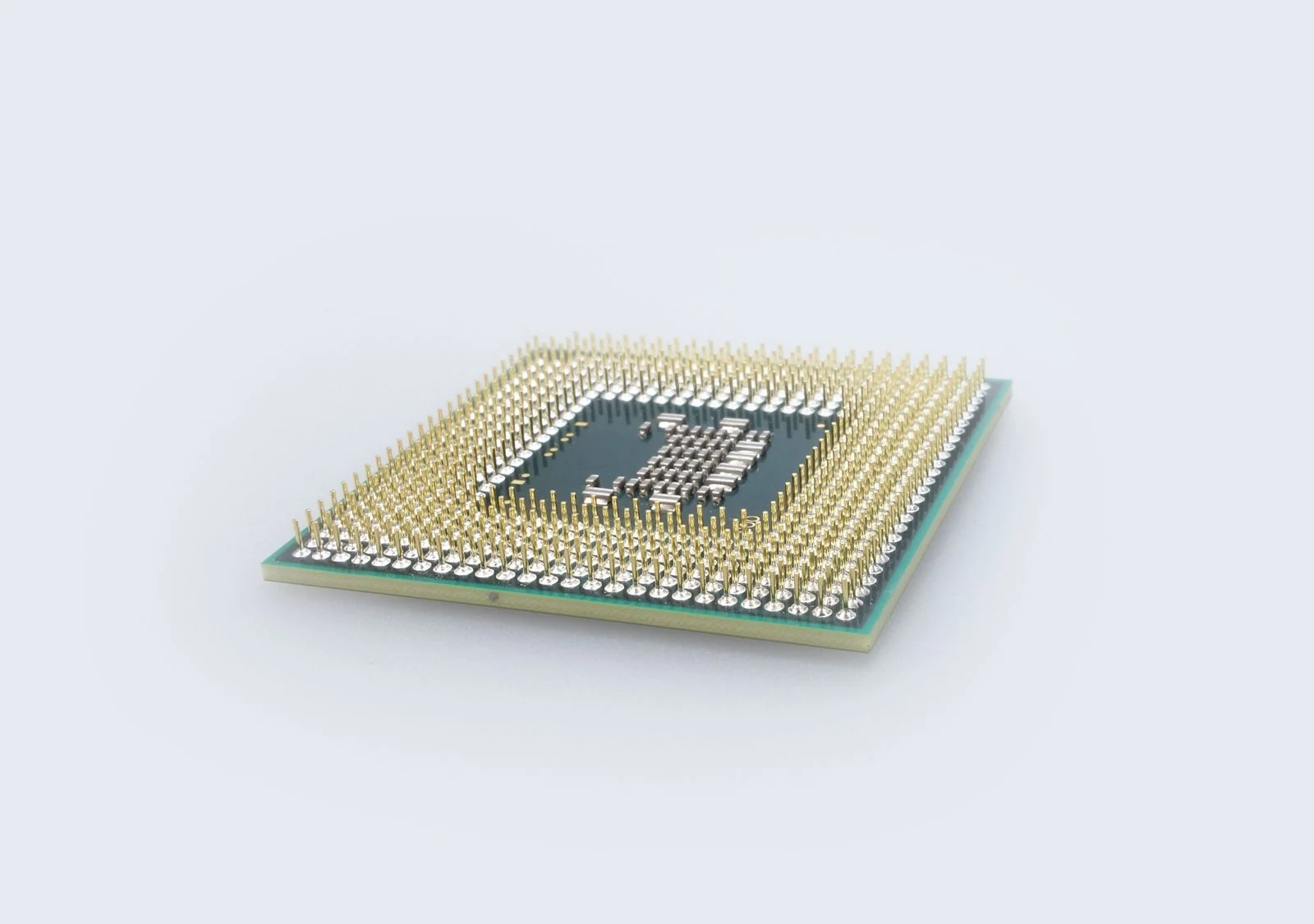
A CPU bottleneck happens when the processor cannot prepare frames fast enough to keep the GPU fully loaded. This guide explains how to spot it properly, why total CPU usage often misleads gamers, and how tools like CapFrameX and PresentMon reveal the real limiter.
What a CPU bottleneck actually means
A CPU bottleneck happens when the processor cannot prepare frames quickly enough for the GPU to stay fully saturated. Before the GPU can render a frame, the CPU has to handle game logic, simulation, draw calls, asset management, and other frame preparation tasks. When that work falls behind, the GPU waits for new instructions instead of running at full speed.
This is why a powerful graphics card can still deliver disappointing performance. The GPU is not necessarily the problem. It may simply be underfed by the rest of the system, with the CPU, memory, or platform latency limiting frame delivery.
Why total CPU usage is a bad way to detect bottlenecks
One of the biggest mistakes in PC gaming diagnostics is treating overall CPU usage as the main indicator of a bottleneck. A system can be heavily CPU bound even when total CPU usage only shows 50 to 70 percent. That number is just the average across every core and thread, which hides the threads that are actually hitting their limit.
For example, if a game is hammering two threads at 100 percent on a 20-thread CPU, Task Manager may only show around 10 percent total usage. The game is still CPU limited because those active threads are already maxed out, even though the processor as a whole looks underutilized.
That is why you should monitor individual threads instead of trusting a single CPU percentage. A good overlay makes it much easier to see whether one or more cores are pinned while frame rate and GPU usage stay lower than expected.
How to Lower Background Processes for Better Gaming Performance
Low GPU usage is often the clearest warning sign
In a balanced gaming workload, GPU usage should usually sit close to 99 percent. If your GPU usage keeps dropping into the 30 to 70 percent range and you are not hitting a frame cap, refresh cap, or built-in engine limit, there is a strong chance the system is CPU bound.
GPU power draw is another useful signal. If your card is rated for around 220W but only pulls 140W during gameplay, that usually means it is not being kept busy. The GPU is capable of doing more work, but the CPU or platform is not feeding it frames quickly enough.
This matters because many users assume low GPU usage means a driver issue or a weak graphics card. In reality, it often points to a frame preparation bottleneck elsewhere in the system.
Common FPS Fixes for PC Games - OCCT, DDU, shadercache
Engine limits can look like bottlenecks
Not every case of low CPU usage and low GPU usage is a hardware bottleneck. Some games are engine bound or intentionally capped. A title with a hard 60 FPS cap can show modest usage on both the CPU and GPU without either part being the real problem.
Elden Ring is a simple example of this type of behaviour. If the game is locked by design, the hardware may never need to reach full utilisation. That is why you should always rule out frame caps, V-Sync behaviour, and engine limits before blaming the CPU.
The right way to identify a CPU bottleneck
The most reliable way to confirm a CPU bottleneck is to combine GPU usage, per-thread monitoring, and PresentMon data. Tools like CapFrameX can show all of these metrics in a way that is much more useful than Task Manager alone.
- Start by monitoring GPU usage and individual CPU thread usage with an overlay such as CapFrameX or MSI Afterburner.
- Check whether GPU usage is consistently below 99 percent during gameplay.
- Make sure you are not hitting a frame limit, refresh limit, V-Sync cap, or known engine cap.
- Enable PresentMon metrics in CapFrameX and look at GPU Busy.
- Compare average Frame Time with average GPU Busy time.
- If Frame Time is clearly higher than GPU Busy, the missing time is being spent elsewhere, which usually confirms a CPU or system-side bottleneck.
- If Frame Time and GPU Busy are nearly identical, the GPU is the primary limiter.
GPU Busy vs Frame Time explained
Frame Time is the total time required to present a frame. GPU Busy isolates the time the GPU actually spent working on that frame. The difference between those two values is what makes this method so useful.
If your average Frame Time is 7 ms but GPU Busy is only 5 ms, the extra 2 ms is being lost outside the GPU. That gap usually points to CPU-side delays, scheduling issues, memory bottlenecks, or other system limitations. If Frame Time is 10.6 ms and GPU Busy is 10 ms, the GPU is doing almost all of the work and the system is mainly GPU bound.
GPU Busy deviation is also worth watching. A high deviation percentage can indicate inconsistent frame delivery and a more severe bottleneck, even if average numbers look acceptable.
Real-world example: when the GPU is waiting
A useful example comes from Cyberpunk 2077 testing on an Intel 14600KF restricted to 4 performance cores. In that scenario, CPU usage hit its limits and GPU usage dropped into the 30 to 50 percent range. The graphics card was no longer the primary bottleneck because it was waiting on the processor.
In heavier native-resolution or DAA workloads, GPU Busy and Frame Time can move much closer together at roughly 10 ms each. That points to the GPU becoming the main limiter again. This is why bottlenecks are not fixed traits of a PC. They can shift depending on settings, scene complexity, and game behaviour.
How resolution and upscaling change the bottleneck
Reducing internal resolution makes the GPU’s job easier, which can expose CPU limitations more clearly. If you switch to a lighter rendering mode such as DLSS Performance, the GPU can finish its work faster, so the CPU has to prepare frames at a higher rate to keep up.
Increasing resolution does the opposite. Moving to 4K pushes more work onto the GPU, which often shifts the bottleneck away from the CPU and toward the graphics card. This is why some systems look CPU bound at 1080p but GPU bound at 1440p or 4K.
The key lesson is that bottlenecks move with the workload. A CPU bottleneck is not just about the hardware you own. It is also about the settings and resolution you are asking that hardware to run.
Boost Your FPS - How Faster RAM and More Memory Improve Gaming Performance
XMP vs EXPO vs DOCP: Unlock Your RAM’s Real Performance
Can frame generation help?
DLSS Frame Generation can reduce the visible impact of a CPU bottleneck in some games because it changes how frames are delivered to the display. In certain cases, GPU Busy and Frame Time can effectively converge, making the system feel less CPU limited from a frame output perspective.
That does not mean the CPU suddenly became faster. Frame Generation is working around the limitation in the delivery path, and the trade-off is usually higher input latency. For slower single-player games, that may be acceptable. In fast competitive titles, it can feel worse even if the frame counter looks better.
The risk of pairing a weak CPU with a strong GPU
Buying a high-end GPU for a lower-end CPU can make sense as an upgrade path, but it is important to understand the trade-off. A card like an RTX 4080 can perform much closer to a cheaper GPU if the processor cannot feed it properly. Until the CPU is upgraded, a large part of the graphics card’s performance remains unused.
This is why “future-proofing” with an oversized GPU does not always deliver immediate value. The system only performs as well as its current bottleneck allows.
Practical tips to diagnose and improve a CPU bottleneck
- Watch per-thread CPU load, not just total CPU usage.
- Treat low GPU usage without a frame cap as a warning sign.
- Check GPU power draw to see whether the card is actually being fully loaded.
- Use CapFrameX with PresentMon to compare GPU Busy against Frame Time.
- Test different resolutions or upscaling modes to see how the bottleneck shifts.
- Remember that RAM speed, memory tuning, and background processes can make a CPU bottleneck worse.
- Use Frame Generation carefully if you want smoother output but can tolerate extra latency (Typically Single Player Games).
Sometimes the term CPU bottleneck is used as shorthand for a broader system-side limitation. Slow memory, poor RAM tuning, heavy background processes, or even storage behaviour can all contribute to the same result: the GPU is left waiting.
FAQ
Because overall CPU usage is an average across all threads. A game can max out one or two critical threads while total CPU usage still looks moderate, which creates a CPU bottleneck even though the full processor is not at 100 percent.
GPU Busy is the amount of time the GPU actually spends rendering a frame. When Frame Time is much higher than GPU Busy, the delay is happening outside the GPU, which usually points to a CPU or system-side bottleneck.
In most uncapped scenarios, close to 99 percent GPU usage is a good sign that the graphics card is being fully utilised. Lower usage can be normal in capped or engine-limited games, but otherwise it often suggests a CPU bottleneck.
Yes. Slow RAM, unstable memory settings, or memory running below its rated profile can reduce frame preparation speed and make the system behave as if the CPU is the bottleneck.
No. A CPU bottleneck does not damage hardware by itself. It simply means the processor or wider system cannot keep up with the GPU in that workload, which limits performance.
- CONTROL Resonant7 min read
CONTROL Resonant Intel Arc Performance: Driver 32.0.101.9033 Benchmark & Best Settings
- Beast of Reincarnation6 min read
Beast of Reincarnation FPS Boost: Best Settings to Fix Lag and Stutter
- Marvel Rivals FPS fix7 min read
Marvel Rivals FPS Boost Guide: Fix Stutters and Input Lag on PC