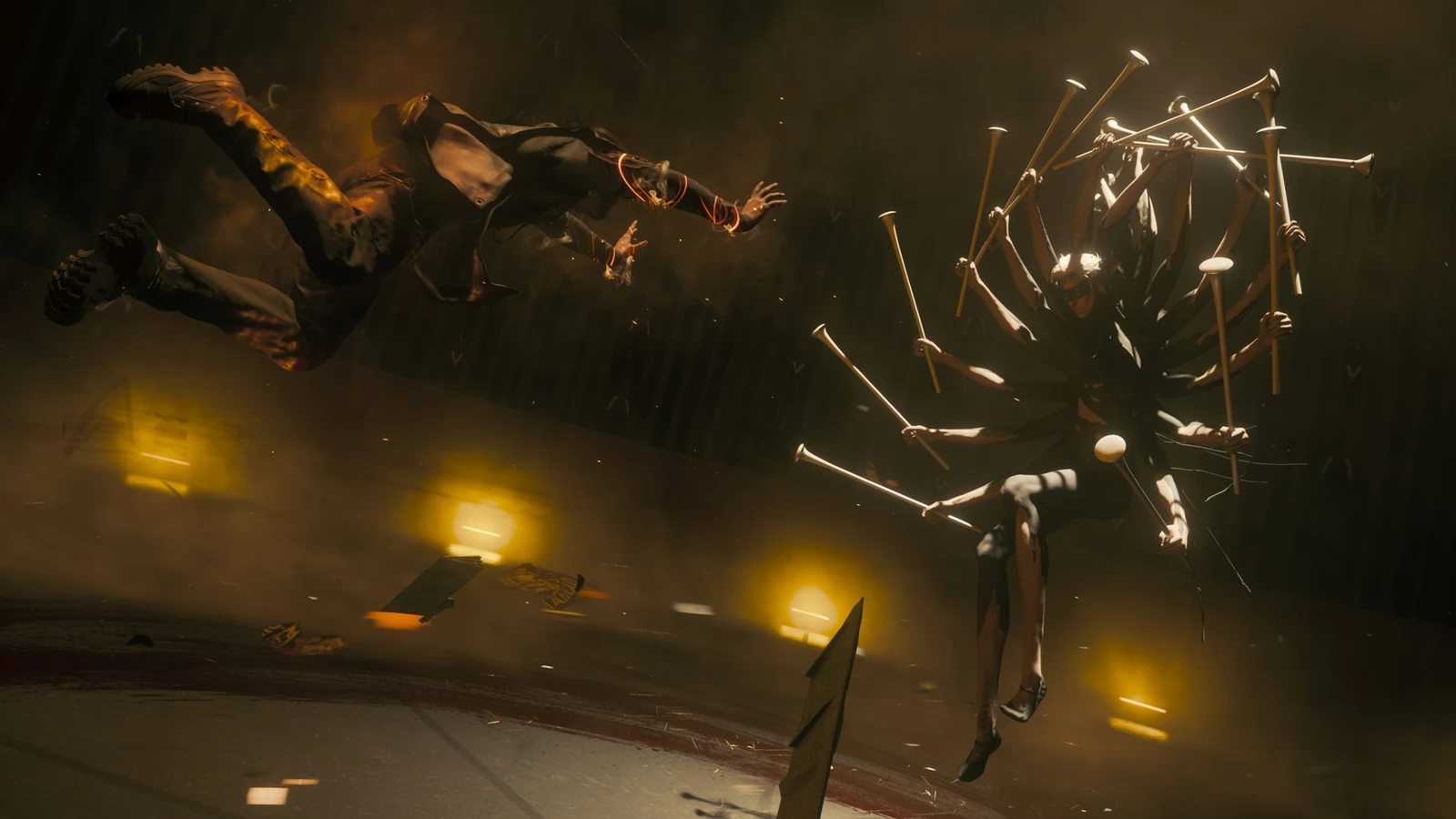
Intel Arc performance can change significantly between driver releases, making CONTROL Resonant a strong candidate for controlled driver testing. Driver 32.0.101.9033 adds official Game On support, but average FPS alone does not tell the full story. This guide focuses on 1% lows, frame times, VRAM usage, shader stutter, ReBAR, FSR, and practical settings for Arc B580 and A770 GPUs.
Intel Arc Driver 32.0.101.9033 and CONTROL Resonant
Intel Arc Graphics Driver 32.0.101.9033 adds official Game On support for CONTROL Resonant across supported Arc B-Series, Arc A-Series, and compatible Core Ultra graphics hardware. The important question for Arc owners is not simply whether the game launches, but whether the new profile improves frame pacing, shader behavior, memory management, and overall stability compared with the previous driver.
Intel does not provide a specific percentage performance uplift for CONTROL Resonant in the driver information supplied here. That means the most reliable way to judge the update is a controlled A/B test using the same hardware, game version, save location, graphics settings, and benchmark route before and after installing 32.0.101.9033.
Why Average FPS Is Not Enough
Average FPS can make a benchmark look healthy while hiding short but noticeable frame-time spikes. CONTROL Resonant should therefore be tested with more than a single FPS counter, particularly when investigating traversal hitching, asset streaming, or heavy combat.
- Average FPS for overall throughput
- 1% low FPS for sustained smoothness
- 0.1% low FPS for severe hitching
- Frame-time consistency in milliseconds
- Peak VRAM allocation
- GPU utilization and thermal behavior
- Repeatable results across multiple benchmark runs
The 1% lows and frame-time graph are especially useful when determining whether a driver update has actually made gameplay smoother. A small average-FPS change can still be worthwhile if the worst frame-time spikes become less frequent.
High FPS but Game Still Stutters? How to Fix Frame Time Spikes
How to Benchmark Driver 32.0.101.9033 Against an Older Intel Arc Driver
Prepare a Repeatable Test
Start with the older Intel Arc driver you want to use as the baseline. Disable unnecessary background applications and overlays so Discord, Steam, Xbox Game Bar, monitoring utilities, or other software do not introduce additional benchmark variance.
How Discord, Nvidia, and Other Overlays Affect FPS & Latency
Choose a repeatable section of CONTROL Resonant that stresses both asset streaming and combat. A roughly 60-second route through an asset-dense indoor area followed by a particle-heavy combat sequence gives you a more useful comparison than standing still in an empty room.
Record the Legacy Driver Results
Run the same route several times at 1080p and 1440p. Test native rendering first, then repeat with the FSR mode you intend to use. Keep every graphics option unchanged between runs.
- Average FPS
- 1% low FPS
- 0.1% low FPS
- Peak VRAM usage
- Frame-time behavior
- GPU temperature and utilization
- Any visible shader or traversal hitching
Clean Install Intel Arc Driver 32.0.101.9033
For the cleanest driver comparison, remove the previous graphics driver before installing 32.0.101.9033. Display Driver Uninstaller can be used from Windows Safe Mode to remove old driver files and reduce the chance of legacy components interfering with the new Game On profile.
How to Properly DDU Your GPU Drivers Before Reinstalling
- Download the Intel Arc 32.0.101.9033 driver before removing the existing installation
- Disconnect unnecessary background applications and save your benchmark settings
- Boot Windows into Safe Mode
- Run Display Driver Uninstaller for the Intel graphics driver
- Restart Windows
- Install Intel Arc Graphics Driver 32.0.101.9033
- Reboot again before benchmarking
- Confirm that your game settings and test conditions have not changed
Repeat the Exact Same Benchmark
Load the same save, follow the same route, use the same resolution and graphics settings, and record the same performance metrics. Comparing equivalent runs is what separates a useful driver delta test from an FPS result affected by different scenes or background activity.
Pay particular attention to 1% lows and frame-time spikes during zone transitions, explosions, particle effects, and the first appearance of new assets. Those areas are more likely to expose shader compilation or streaming problems than a static benchmark location.
Best CONTROL Resonant Settings for Intel Arc B580 and A770
A sensible optimization strategy is to establish a stable 1080p baseline before increasing resolution or visual quality. The Arc B580 and A770 both have enough VRAM to keep texture quality relatively high, so the better performance savings should come from reducing expensive lighting and shadow options rather than immediately lowering textures.
Intel Arc CONTROL Resonant Performance & Target Matrix
Use these FPS ranges as tuning targets, not measured benchmark results. Validate each profile with the repeatable test above; actual performance will vary with your system and the scene.
| GPU Model | Target Resolution | Recommended Settings | Upscaling Mode | Target FPS Range |
|---|---|---|---|---|
| Intel Arc B580 (12GB) | 1080p Native | High Textures, Medium Shadows | Native / None | 60–75 FPS |
| Intel Arc B580 (12GB) | 1440p | Medium Preset | FSR Quality | 60+ FPS |
| Intel Arc A770 (16GB) | 1080p Native | High Preset | Native / None | 55–65 FPS |
| Intel Arc A770 (16GB) | 1440p | Medium Preset | FSR Quality | 50–60 FPS |
Recommended 1080p Baseline
- Display Mode: Fullscreen
- Resolution: 1920x1080
- Upscaling: Native rendering initially
- Texture Quality: High
- Shadow Quality: Medium
- Global Illumination or Lighting Quality: Medium
- VSync: Use when required for tearing control
- Variable Refresh Rate: Enable when supported by the display
- Resizable BAR: Enabled
Use this profile to establish your native-resolution baseline. If GPU utilization is consistently high and frame rates still fall below your target, reduce the heaviest lighting or shadow settings before sacrificing texture quality.
Recommended 1440p Baseline
- Display Mode: Fullscreen
- Resolution: 2560x1440
- Upscaling: FSR Quality
- FSR Balanced: Use only if additional performance is required
- Texture Quality: High
- Shadow Quality: Medium
- Lighting or Global Illumination: Medium
- Resizable BAR: Enabled
At 1440p, FSR Quality is the logical starting point for Arc B580 and A770 systems when native rendering is too demanding. Move to Balanced only when the extra performance is necessary, because stronger reconstruction normally trades additional image quality for FPS.
Arc B580 vs Arc A770 Settings Strategy
Intel Arc B580
The Battlemage-based Arc B580 should be approached with high textures, medium GPU-heavy effects, and native 1080p as the initial test profile. At 1440p, FSR Quality can reduce rendering load while preserving a sharper image than more aggressive upscaling modes.
Intel Arc A770
The Arc A770 offers a large 16GB VRAM buffer, which makes high texture settings practical even when other GPU-heavy effects need to be reduced. At 1440p, start with medium lighting and shadows alongside FSR Quality rather than lowering texture resolution unnecessarily.
The B580 and A770 should still be benchmarked independently rather than assuming the same average FPS or frame-time behavior. Battlemage and Alchemist are different Arc generations, and driver scheduling behavior can affect them differently.
CONTROL Resonant FSR vs Native Rendering on Intel Arc
CONTROL Resonant does not provide native Intel XeSS support according to the supplied game information, leaving native rendering and AMD FSR as the main practical options for Intel Arc users.
At 1080p, begin with native rendering because aggressive upscaling can become easier to notice at lower output resolutions. At 1440p, FSR Quality provides a more useful performance lever and should be tested before reducing several graphics settings at once.
- 1080p: Start with native resolution
- 1440p: Start with FSR Quality when additional FPS is required
- FSR Balanced: Reserve for situations where Quality still misses your performance target
- Compare image quality during movement rather than judging only static screenshots
- Recheck 1% lows after changing the upscaling mode
Resizable BAR Is Critical for Intel Arc Performance
Resizable BAR should be enabled before evaluating CONTROL Resonant performance on an Intel Arc graphics card. Arc hardware relies heavily on efficient CPU access to the GPU frame buffer, and running without ReBAR can cause major performance degradation that makes driver or graphics-setting comparisons misleading.
Check the motherboard BIOS or UEFI and confirm that Resizable BAR is enabled before beginning your benchmark. Also verify its status inside your Intel graphics software or another compatible system-information utility after Windows starts.
How to Access BIOS or UEFI on Any PC
How to Reduce Shader and Traversal Stutter
If CONTROL Resonant hitches when entering new areas or during effects-heavy combat, monitor the frame-time graph instead of relying only on average FPS. Shader compilation and asset streaming can produce brief spikes that are far more noticeable during gameplay than their impact on the overall average suggests.
Driver 32.0.101.9033 includes the CONTROL Resonant Game On profile, so it should be the first driver to test when investigating launch-period Arc performance. However, the real improvement should still be verified by comparing repeatable frame-time data against the older driver.
Storage can also influence asset-streaming behavior. Installing the game on an NVMe SSD provides a better baseline for testing than using a slower storage device, particularly when investigating hitches that occur while new areas are loading.
NVMe vs SSD: The Ultimate Compatibility and Speed Guide
Troubleshooting Severe Stuttering or Low FPS
Check ReBAR First
If an Arc B580 or A770 is delivering unexpectedly poor performance, confirm that Resizable BAR is enabled before changing dozens of in-game settings. A disabled ReBAR configuration can create a system-level bottleneck that graphics tuning will not solve.
Clean Up Old Driver Files
If problems appeared after updating the GPU driver, perform a clean driver installation rather than repeatedly installing newer versions over the existing package. Removing legacy files gives the Game On profile a cleaner environment and removes one major variable from troubleshooting.
Separate Shader Hitches From Constant Low FPS
A system that runs smoothly most of the time but briefly freezes when entering a new area has a different problem from one that remains GPU-bound at low FPS continuously. Use frame-time monitoring to identify whether the issue is an occasional spike or sustained rendering load.
Change One Setting at a Time
Avoid switching resolution, FSR mode, shadows, lighting, VSync, and several driver options simultaneously. Change one major variable, repeat the same benchmark route, and compare the result. This makes it much easier to identify which setting actually improved performance.
Intel Arc CONTROL Resonant Optimization Checklist
- Update to Intel Arc Graphics Driver 32.0.101.9033
- Confirm Resizable BAR is enabled
- Disable unnecessary overlays during testing
- Use Fullscreen as the benchmark baseline
- Test native 1080p first
- Use FSR Quality as the first 1440p performance option
- Keep textures High when VRAM capacity allows
- Reduce shadows and heavy lighting settings to Medium
- Monitor 1% lows and frame times instead of average FPS alone
- Install the game on an NVMe SSD when possible
- Benchmark the same route after every major change
Does Driver 32.0.101.9033 Actually Boost CONTROL Resonant FPS?
Driver 32.0.101.9033 provides official Intel Game On support for CONTROL Resonant, but Game On validation by itself does not establish an exact FPS increase. Intel does not provide a specific percentage uplift in the supplied release information, so any performance gain should be demonstrated through controlled testing.
The most valuable result is not necessarily the driver with the highest peak FPS. If 32.0.101.9033 produces stronger 1% lows, fewer frame-time spikes, more consistent VRAM behavior, and less traversal hitching while average FPS remains similar, that can still represent a meaningful improvement in actual gameplay smoothness.
FAQ
Driver 32.0.101.9033 adds official Game On support for CONTROL Resonant, but the exact FPS uplift is not specified in the supplied driver information. Compare it directly with the previous driver using identical benchmark conditions and pay particular attention to 1% lows and frame-time consistency.
Start at 1080p Fullscreen with native rendering, High textures, and Medium shadows and lighting. For 1440p, use FSR Quality as the first performance option before moving to more aggressive upscaling.
The A770 can make good use of its 16GB VRAM capacity with High textures. Start with Medium shadows and lighting, test native 1080p first, and use FSR Quality at 1440p if native rendering does not meet your performance target.
According to the supplied game information, CONTROL Resonant does not include native Intel XeSS support. Intel Arc users can use native rendering or AMD FSR depending on resolution and performance requirements.
Check that Resizable BAR is enabled, install the latest supported Intel Arc driver cleanly, monitor shader and traversal frame-time spikes, disable unnecessary overlays while testing, and make sure the game is installed on sufficiently fast storage.