This guide covers a layered approach to Fortnite Chapter 7 Season 3 optimization, including display mode choices, advanced FPS capping, low-end PC fixes, storage and installation advice, and network prioritization to reduce lag and improve consistency.
Why Fortnite Chapter 7 Season 3 Performance Feels Inconsistent
Fortnite Chapter 7 Season 3 optimization is not just about turning every setting to Low. Most players struggling with bad FPS, unstable frame times, high input delay, or random ping spikes are dealing with a mix of graphics settings, poor frame pacing, installation choices, and background system behavior. Fixing one layer helps, but combining the right tweaks produces the biggest competitive gains.
The goal is simple: make Fortnite run with stable frame delivery, fast input response, and minimal network interruptions. This matters even more on lower-end systems, where every wasted resource can turn a playable match into stuttery, delayed gameplay.
Best In-Game Video Settings for Competitive Play
Full Screen vs Windowed Full Screen
Full Screen remains the best choice for the lowest latency and the most consistent FPS. It gives Fortnite the cleanest path to system resources and usually avoids extra desktop compositing overhead. For most competitive players, this should be the default display mode.
Windowed Full Screen can still work well if you enable the Windows feature called Optimizations for windowed games. With that setting turned on, Windowed Full Screen can perform much closer to true Full Screen while keeping the convenience of easier alt-tabbing.
- Open Windows Settings.
- Go to Gaming.
- Open Game Mode, then select Graphics.
- Click Change default graphics settings.
- Enable Optimizations for windowed games.
Recommended Visual Settings Priorities
Competitive Fortnite settings should prioritize visibility and stable performance over visual effects. Lowering expensive settings reduces GPU load, but some options still offer gameplay value. View Distance is the main example. Medium is often the best balance because it can improve player visibility with very little performance loss compared to Low.
- Use Full Screen whenever possible.
- Keep View Distance on Medium for better visibility without a major FPS hit.
- Disable unnecessary eye candy and background visual features.
- Turn off Contextual Tips to reduce extra screen clutter and minor CPU interruptions.
- Disable NVIDIA Highlights if you do not actively use it.
The Truth About Stretched Resolution
Stretched resolution is not the best choice for most players in Chapter 7 Season 3. In almost every case, native resolution delivers a better overall experience with cleaner visuals, more predictable scaling, and fewer trade-offs. Unless you have a very specific reason to use stretched res, native resolution is the safer and more effective option.
Advanced FPS Cap Settings for Better Frame Times
Many players cap FPS directly to their monitor refresh rate and stop there. That basic method works, but it is not always the smoothest option. A better approach is to use a dual-layer cap. This helps stabilize frame times and can reduce the micro-variations that make gameplay feel inconsistent even when your FPS counter looks fine.
How the Dual-Layer FPS Cap Works
Set Fortnite’s in-game FPS cap one or two steps above your monitor refresh rate, then apply the real cap at the driver level. For example, if you use a 144Hz monitor, set Fortnite to 160 or 165 FPS in-game, then set the driver cap to exactly 144 FPS. This gives the game room to breathe while the GPU driver handles the final limit more cleanly.
NVIDIA Frame Cap Setup
- Open Fortnite video settings.
- Set Frame Rate Limit one or two steps above your monitor refresh rate.
- Open NVIDIA Control Panel.
- Go to Manage 3D Settings.
- Find Max Frame Rate.
- Set Max Frame Rate to exactly your monitor refresh rate.
- Disable NVIDIA Reflex Low Latency when using this method.
NVIDIA Reflex is usually a strong latency feature, but it does not pair well with this advanced cap setup in every case. If you notice frame drops or instability, leave Reflex off when using the driver-level cap.
AMD Frame Cap Setup
- Open Fortnite video settings.
- Set Frame Rate Limit one or two steps above your monitor refresh rate.
- Open AMD Adrenalin software.
- Find Radeon Chill.
- Set both the minimum and maximum FPS to exactly your monitor refresh rate.
This creates a similar result for AMD users by forcing a tight cap at the driver level. The main goal is better frame pacing, not just a lower average GPU load.
Why Your FPS Still Feels Bad Even With a Cap
A stable number on the FPS counter does not always mean stable performance. You can still get uneven frame delivery, background CPU interruptions, or rendering spikes. That is why the cap method matters. Smooth frame times feel better than a fluctuating stream of higher raw FPS.
On weaker CPUs, even the in-game FPS counter can cost a little performance. If you are chasing every frame, especially on a low-end build, turning the counter off can provide a small improvement.
Low-End PC Survival Tweaks
How to Force DX11 Legacy Performance Mode
Fortnite removed the old DX11-based legacy performance mode from the normal interface, but it can still be forced through launch options. This is especially useful for lower-end PCs that struggle with heavier rendering paths.
- Open the Epic Games Launcher.
- Go to Library.
- Find Fortnite and click the three dots.
- Select Manage.
- Turn Launch Options on.
- Enter -d3d11.
- Restart Fortnite.
This can help restore a lighter rendering path on systems that need every possible CPU and GPU savings. It is one of the most valuable tweaks for budget hardware.
Disable High-Resolution Textures
If you want the best Fortnite performance, disable high-resolution texture files during installation or remove them afterward if available. These assets take up more storage space and increase streaming demand without helping competitive performance. For lower-end PCs, keeping them disabled is mandatory.
Use Simpler Skins
Cosmetic choice can affect performance more than many players expect. High-animation or visually complex skins demand more rendering work. If your system is struggling, switching to a cleaner skin with fewer effects can reduce load and improve consistency during fights.
- Prefer simple skins with minimal animation.
- Avoid heavy cosmetic combinations on weak systems.
- Prioritize visibility and clean models over visual flair.
System Settings That Actually Help
Do Not Set Fortnite to High Priority
Setting Fortnite to High or Realtime priority in Task Manager is a common mistake. It sounds useful, but it can starve important background processes and hardware drivers of CPU time. That includes mouse and keyboard handling, which can create worse input delay instead of improving it.
For the best balance, leave Fortnite at Normal priority. This gives the game what it needs without disrupting the rest of the system. Stable resource scheduling usually feels better than aggressive priority forcing.
Storage and Install Location Matter
Fortnite should be installed on your fastest SSD, ideally an NVMe drive. Slow storage can cause hitching, asset streaming delays, and inconsistent loading during matches. If your C drive is your fastest SSD or NVMe, that is the best place to install the game.
- Install Fortnite on an NVMe SSD whenever possible.
- Use your fastest drive, usually the C drive on most gaming systems.
- Avoid hard drives for competitive play.
- Keep high-resolution textures disabled for lower storage overhead.
Deep System Tweaks
In-game settings are only part of the optimization stack. System-level tuning through registry or BIOS changes can produce bigger gains, especially on heavily bottlenecked PCs. These deeper tweaks should be approached carefully, but they are often where major latency and responsiveness improvements come from when the basics are already handled.
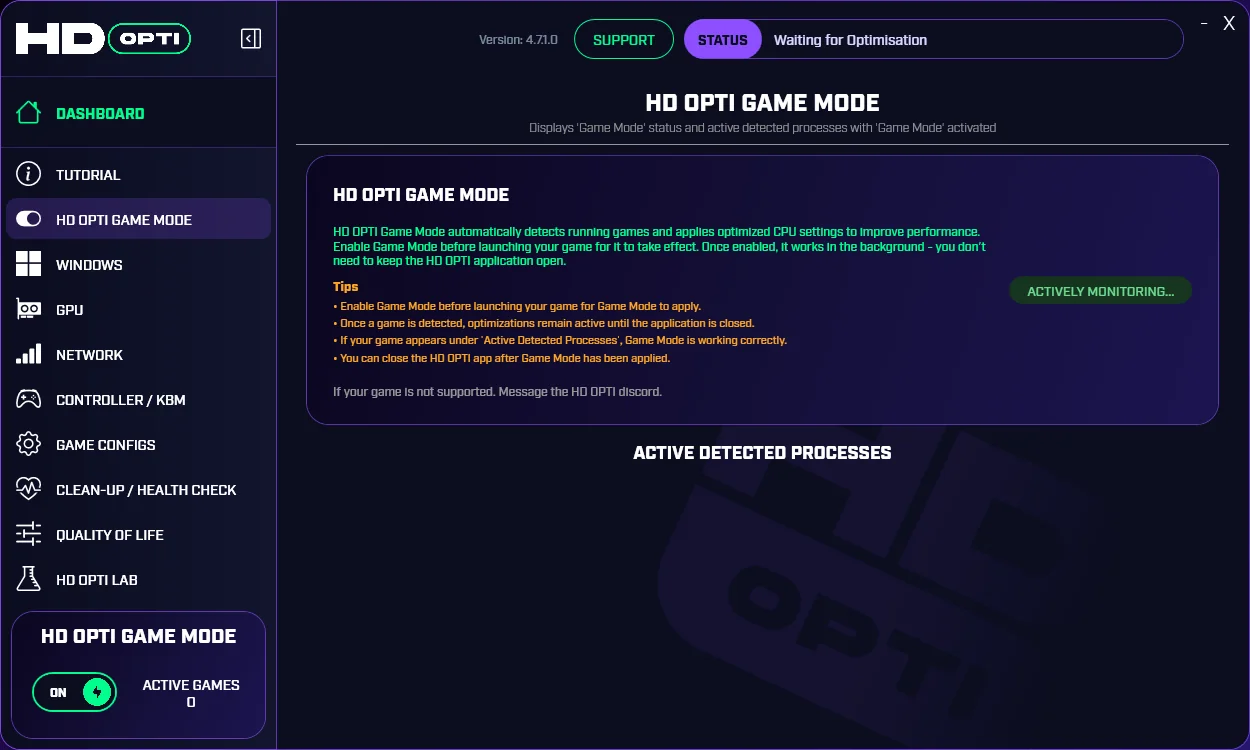
Some players use optimization tools to automate advanced registry and BIOS-related changes. That can save time, but you should always understand what is being changed before applying broad system tweaks.
Network Optimization: How to Reduce Ping and Packet Problems
FPS fixes improve responsiveness, but network quality still decides whether your shots register cleanly and whether movement feels delayed. If your connection is unstable or shared with other devices, setting up QoS can help Fortnite traffic take priority over less important network activity.
What QoS and DSCP Mean
QoS stands for Quality of Service. It allows you to prioritize certain traffic on your system or network. DSCP stands for Differentiated Services Code Point, which is a packet tag used to signal priority. For Fortnite, the recommended DSCP value in this setup is 46.
How to Create a Fortnite QoS Policy in Windows
Before creating the policy, some users run a provider-specific script as Administrator to enable policy support. After that, the policy can be added through the Local Group Policy Editor.
- Press Windows + R.
- Type gpedit.msc and press Enter.
- Go to Computer Configuration.
- Open Windows Settings.
- Open Policy-based QoS.
- Create a new policy named Fortnite.
- Set the DSCP value to 46.
- Choose Only applications with this executable name.
- Enter the path to Fortnite.exe.
- Apply the policy to both TCP and UDP.
- Finish the setup and restart if needed.
This kind of prioritization can help keep Fortnite packets ahead of lower-priority traffic, especially on busy home networks. It will not magically fix a bad ISP route, but it can reduce local congestion issues.
Extra Tips for Smoother Competitive Gameplay
The best Fortnite Chapter 7 Season 3 optimization results come from stacking small gains. No single setting fixes everything, but the right combination can noticeably improve consistency, aiming feel, and responsiveness.
- Use Full Screen for the best latency.
- Enable Optimizations for windowed games only if you must use Windowed Full Screen.
- Apply the dual-layer FPS cap for smoother frame pacing.
- Disable NVIDIA Reflex when using the advanced NVIDIA cap method.
- Force DX11 with -d3d11 on low-end systems.
- Leave Fortnite on Normal priority.
- Install the game on an NVMe SSD.
- Disable high-resolution textures.
- Use simple skins if your system is near its limits.
- Turn off the FPS counter on weak CPUs if you need every bit of performance.
Final Recommendation
If you want the strongest competitive setup, focus first on Full Screen mode, an SSD install, cleaner in-game visuals, and the advanced frame cap method. Then add lower-level improvements like QoS and launch arguments if your system or connection still feels inconsistent. For low-end PCs, the biggest wins usually come from forced DX11, disabled high-resolution textures, and reducing every unnecessary source of CPU and GPU overhead.
FAQ
Full Screen is still the best option for the lowest latency and most stable FPS. Windowed Full Screen can perform much better if you enable Optimizations for windowed games in Windows, but Full Screen remains the preferred competitive setting.
The most effective method is a dual-layer cap. Set Fortnite’s in-game FPS limit slightly above your monitor refresh rate, then apply an exact cap at the driver level through NVIDIA Max Frame Rate or AMD Radeon Chill. This usually produces better frame pacing than a basic in-game cap alone.
NVIDIA Reflex is normally useful, but it should be disabled when using the advanced NVIDIA frame cap method described in this guide. Running both together can lead to frame drops or instability for some systems.
No. High or Realtime priority can make input delay worse by starving important drivers and system processes of CPU time. Keeping Fortnite at Normal priority is the better choice for smooth and responsive gameplay.
Yes, slightly. On weaker CPUs, the FPS counter can add a small amount of overhead. If you are trying to squeeze out maximum performance, especially on a low-end PC, turning it off may help.